Paul Mackenzie Biography | Career, Education
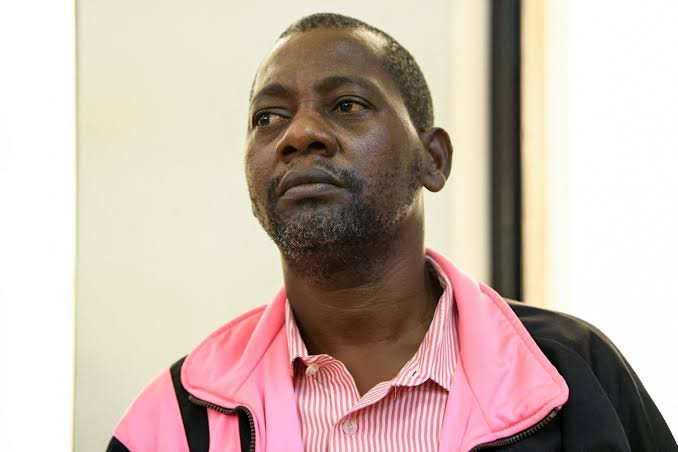
Paul Nthenge Mackenzie is a Kenyan preacher who rose from modest beginnings as a street trader and taxi driver to become the founder of Good News International Ministries. His name became known across Kenya and beyond after authorities uncovered mass graves in Shakahola Forest in Kilifi County in 2023, linked to extreme fasting practices he promoted among his followers. In October 2026 a court convicted him of 191 murders, and in November 2026 he received a 200 year prison sentence.
This biography traces his path from childhood in coastal Kenya through the growth of his ministry, earlier clashes with authorities, the events at Shakahola, and the legal outcome that followed. It draws on publicly reported details from family accounts, parliamentary inquiries, court proceedings, and contemporary news coverage to present a clear record of his life and the consequences of his teachings.
Paul Mackenzie Early Life and Background
Paul Nthenge Mackenzie was born in 1973 in Lunga Lunga, Kwale County, in southeastern Kenya near the border with Tanzania. Some official records examined later by a parliamentary committee listed the year as 1976, creating a minor discrepancy that has never been fully resolved. He was the fifth born child in a family of ten siblings. His parents were Mackenzie Kiseni, sometimes also referred to as Kitivo Makenzi Kisini, and Anastacia Mwele. The family belonged to the Kamba ethnic community and practiced a form of Baptist Christianity. His father worked away from home for periods as a contractor and later as a government related worker in Mombasa, leaving much of the day to day upbringing to his mother.
The household was modest. Relatives later described young Paul as quiet, obedient, and generous with whatever little he had. He did not stand out as especially ambitious or troublesome during his childhood years. The family later relocated within the coastal region, and Paul spent formative time in the area around Lunga Lunga before moving further for work and education. After secondary school he lived for a period with an elder brother in Likoni, Mombasa. There he began earning a living by hawking, including pushing a handcart to sell flour. These early struggles shaped a practical outlook that later mixed with his growing interest in religion.
By the mid 1990s he had moved to Malindi, a coastal tourist town. A sister who lived there and was married to a Belgian helped him acquire a vehicle, allowing him to start working as a taxi driver. He operated around areas such as Palm Gardens. Colleagues from that period recalled that he gradually became more focused on religious matters, attending services and eventually expressing a sense of personal calling to preach. The combination of economic hustle and emerging spiritual conviction marked the transition from ordinary coastal life into the ministry that would define his public identity.
Paul Mackenzie Education
Mackenzie completed primary education at Mwalewa Primary School in Kwale County, sitting for the Kenya Certificate of Primary Education in 1990. He then attended Lukore Secondary School, also referred to in some accounts as Lukole, where he sat the Kenya Certificate of Secondary Education in 1994. His mean grade was a C minus. This level of formal schooling was typical for many young people from rural coastal families at the time and provided basic literacy and numeracy but did not open pathways into higher professional training.
After secondary school he did not pursue university studies. Accounts indicate he later enrolled briefly in a local Bible college or theological training program, though details of the institution and the duration remain limited in public records. His practical education continued through driving lessons that enabled the taxi work in Malindi. The limited formal academic background did not prevent him from developing a confident preaching style that later attracted large audiences. He drew heavily on biblical texts, particularly passages related to prophecy, end times, and personal salvation, and he presented his interpretations with the authority of someone who claimed direct guidance from spiritual sources.
Paul Mackenzie Career and Ministry Beginnings
Mackenzie’s formal entry into religious leadership began around the late 1990s and early 2000s. While still working as a taxi driver he started attending services at Baptist congregations in Malindi and eventually received invitations to preach. By 2003 he founded Good News International Ministries, also known as Good News International Church, initially in the Malindi area. The church grew through personal networks, word of mouth, and later media outreach. Early gatherings took place in homes and modest halls before the group acquired property in places such as Furunzi and Maweni.
His preaching centered on end time messages, the need for personal holiness, and preparation for the return of Jesus Christ. Over time the content became more restrictive. He taught that formal education could be spiritually harmful, that certain forms of modern medicine conflicted with faith, and that government identification systems raised spiritual concerns. Followers were encouraged to prioritize spiritual readiness over conventional social participation. The ministry expanded to several branches in different parts of Kenya, including Nairobi, Watamu, Kitale, Machakos, Naivasha, Mombasa, and other locations.
In 2012 Mackenzie registered Good News Media Limited and began broadcasting sermons through a television channel, often referred to as Times TV or Good News Media. The broadcasts and later YouTube presence extended his reach beyond physical congregations. By the mid 2010s he had built a following that numbered in the thousands, both in person and online. Some followers sold property or relocated to be closer to the ministry. The combination of charismatic delivery, apocalyptic urgency, and claims of divine instruction created a strong sense of loyalty among adherents.
Paul Mackenzie Rise of Good News International and Media Influence
The growth of Good News International reflected both organizational effort and the appeal of its message in communities seeking spiritual certainty. Mackenzie presented himself as a messenger receiving direct instruction from Christ. In a March 2023 video he stated that he had been guided by the voice of Christ regarding the completion of a nine year period of end time preaching. Such statements reinforced the idea among followers that obedience to his directives carried spiritual weight.
Television and digital platforms amplified the message. Sermons criticized mainstream institutions, including aspects of formal schooling, medical practice, and certain government policies. Parents were discouraged from sending children to school. Medical treatment was framed in some teachings as incompatible with pure faith. These positions later became central to official investigations. The church operated with a hierarchical structure in which Mackenzie held primary authority. Deputies and local leaders helped manage branches and enforce teachings.
By 2017 authorities had begun to take notice. Police searched a compound in Malindi and found dozens of children living there without attending school. Mackenzie faced charges related to operating an unregistered educational facility. The case did not end the ministry. In 2019 the church and associated television operations were ordered closed. Mackenzie then shifted focus to land in the Shakahola area of Kilifi County, roughly 70 to 100 kilometres from Malindi. Followers were encouraged to move there, sometimes under the promise of agricultural opportunity or spiritual community. The isolation of the forest location reduced external oversight and increased dependence on the internal leadership structure.
Paul Mackenzie Move to Shakahola and Escalating Practices
The relocation to Shakahola marked a decisive turn. The area, part of former ranch land, offered space for settlement. Followers built simple dwellings and organized into villages. Teaching intensified around the idea that fasting to the point of death would allow believers to meet Jesus before the end of the world. Children were prioritized in the fasting process according to later court findings. Resistance was met with pressure, isolation, or physical enforcement according to prosecution evidence presented at trial.
Burial practices were adapted to avoid detection, with ceremonies sometimes held at unusual hours and described in coded language. The settlement developed its own internal order that limited contact with outsiders. Relatives of followers who tried to intervene often faced difficulty reaching loved ones. The combination of geographic isolation, religious authority, and enforced dietary restriction created conditions in which large numbers of people died.
In April 2023 Kenyan police, acting on information from concerned family members, began searching the area. They discovered shallow graves. Over subsequent months more than 400 bodies were recovered. Nearly half were children. Forensic examinations attributed many deaths to starvation, with others linked to asphyxia, trauma, or related causes. The scale of the discovery shocked the nation and drew international attention. Mackenzie was arrested and charged along with numerous associates.
Paul Mackenzie Legal Troubles and Criminal Proceedings
Earlier encounters with the law had not produced lasting restraint. The 2017 education related case and the 2019 closure of the church and television station represented warnings that did not prevent the later tragedy. After the 2023 discoveries Mackenzie and dozens of co accused faced murder and related charges. The trial examined the organized nature of the fasting directives, the hierarchy of the group, and the vulnerability of children who depended entirely on adults for food and care.
On 19 October 2026 the High Court in Mombasa, presided over by Justice Diana Kavedza, convicted Mackenzie and 28 co defendants of 191 murders. The victims included 190 children and one adult. The court found that an organized system of religious teaching and enforcement had directed the deaths. Medical evidence and witness testimony supported the conclusion that starvation was the primary mechanism, with additional cases of direct violence. Mackenzie denied forcing anyone to fast and maintained that participation was voluntary. The court rejected that defense.
Sentencing took place on 6 November 2026. Justice Kavedza imposed 100 years for the starvation related murders, with those terms running concurrently, and a further 100 years for counts of direct homicide, also concurrent within that category. The two sets of sentences were ordered to run consecutively, producing an aggregate term of 200 years. The judge described Mackenzie as bearing primary criminal culpability as the architect of the enterprise. Prosecutors had sought the death penalty. The court declined to impose it, citing among other factors the possibility that living convicts might still provide information about missing remains. Co accused received sentences ranging from shorter terms up to 160 years depending on their roles.
Mackenzie continues to face separate proceedings related to additional deaths at another location. Appeals processes remain available under Kenyan law.
Paul Mackenzie Achievements and Public Impact
Measured by conventional standards of positive contribution, Mackenzie’s public record is defined more by notoriety than by constructive achievement. He built a multi branch ministry that reached thousands through in person services and media broadcasts. He created an organizational structure capable of mobilizing followers across significant distances. For a period the television outreach gave him a platform that competed with more established religious voices.
The lasting impact, however, is the Shakahola tragedy itself. The case forced national discussion about the regulation of religious groups, the protection of children within closed communities, and the balance between freedom of belief and criminal accountability. It prompted reviews of earlier law enforcement responses and raised questions about how warnings from families and local officials were handled. For victims’ relatives the convictions represented a form of legal recognition of the harm suffered. For Kenyan society the episode remains a cautionary reference point in conversations about extremism and institutional responsibility.
Paul Mackenzie Personal Life
Public information about Mackenzie’s private life is limited compared with the volume of reporting on his ministry and the criminal case. According to a Kenyan parliamentary report and family accounts, he married three times and had children with each wife. His first wife, often referred to as Mama Dan or Agnes, died in 2009. The couple had two children, a son and a daughter. His second wife, Joyce Mwikamba, whom he married around 2012, died in 2018 after a period of ill health that family members linked in time to an earlier arrest. They had four children. He married a third wife, identified in some reports as Rhoda, around 2019.
Family members, including his younger brother Robert Mbatha and his mother Anastacia Mwele, have spoken publicly at different times. Some defended him against the most severe characterizations, describing a generous relative who had helped family members in earlier years. Others expressed distress at the scale of the deaths. Mackenzie’s own statements during the legal process focused on denying coercion and framing the fasting as a matter of individual faith. Details of his current family relationships while in custody remain largely private.
Conclusion
Paul Nthenge Mackenzie’s life moved from ordinary coastal childhood and taxi driving into the leadership of a religious movement that ended in mass death and a lengthy prison sentence. The court record establishes that his teachings and directives created the conditions for the starvation and other deaths of 191 people, predominantly children, at Shakahola. The 200 year sentence reflects the gravity assigned by the Kenyan judiciary to those findings. The broader story continues to influence discussions about faith, authority, vulnerability, and the duty of the state to protect its citizens, especially the youngest among them.
FAQs
Who is Paul Nthenge Mackenzie?
Paul Nthenge Mackenzie is a Kenyan preacher and founder of Good News International Ministries. He was convicted in 2026 of 191 murders linked to enforced fasting practices at a settlement in Shakahola Forest and sentenced to 200 years in prison.
Where was Paul Mackenzie born?
He was born in Lunga Lunga, Kwale County, Kenya. Some records list the birth year as 1973 while others list 1976.
What church did Paul Mackenzie found?
He founded Good News International Ministries, also known as Good News International Church, in Malindi in 2003. The group later expanded to multiple branches and operated a television outreach before its main operations were ordered closed in 2019.
What happened at Shakahola?
In 2023 Kenyan authorities recovered more than 400 bodies from graves in Shakahola Forest in Kilifi County. Investigations linked the deaths to extreme fasting directed by Mackenzie’s group. A court later convicted him of 191 specific murders arising from those events.
What was Paul Mackenzie’s sentence?
On 6 November 2026 the High Court in Mombasa sentenced him to an aggregate of 200 years in prison, consisting of concurrent 100 year terms for starvation related murders and consecutive concurrent 100 year terms for direct homicide counts.
Did Paul Mackenzie have a family?
Yes. Public reports indicate he married three times and had children with each wife. His first two wives died in 2009 and 2018 respectively. He married a third wife around 2019.
What was Mackenzie’s education level?
He completed primary school at Mwalewa Primary School in 1990 and secondary school at Lukore Secondary School in 1994 with a C minus mean grade. He later received some theological training but did not pursue university education.

Kenneth Uzor is a contributing writer at Legit People Biographies, specializing in informative articles about notable personalities, celebrity profiles, career journeys and life stories. His work explores the backgrounds, achievements, professional milestones and personal journeys of famous individuals, helping readers learn more about influential people across different industries.