Paul Biya Biography, Age, Career, Early Life, Net worth, Personal Life, Parents
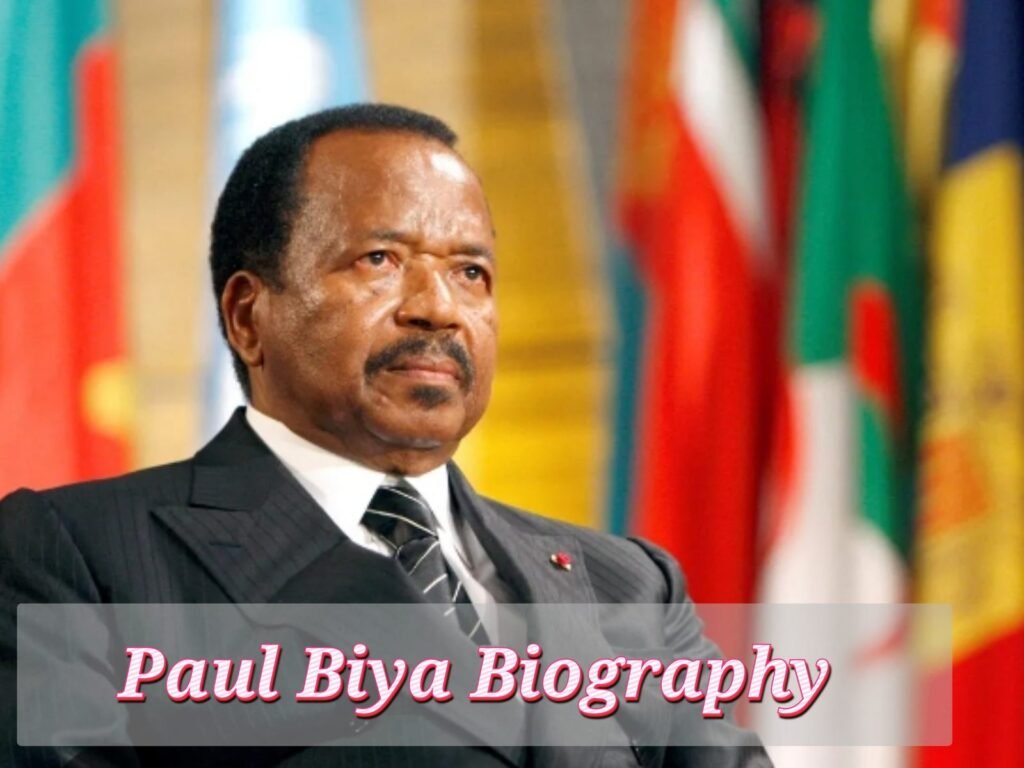
Paul Biya Biography
Paul Biya is the long-serving President of Cameroon, one of Africa’s most enduring political figures. Born in 1933, he has led the country since November 1982, making him one of the world’s longest-ruling heads of state. His presidency spans decades of political stability alongside challenges such as economic reforms, regional tensions, and calls for greater democracy.
Over his tenure, Paul Biya has guided Cameroon through transitions from a one-party system to multiparty politics while maintaining strong control of the ruling party. Supporters credit him with national unity and development initiatives, while critics point to authoritarian practices, electoral controversies, and persistent issues like corruption and the Anglophone crisis. His leadership continues to shape Cameroon’s place in African and international affairs.
Paul Biya Early Life
Paul Barthélemy Biya was born on 13 February 1933 in the village of Mvomeka’a, located in the South Region of Cameroon, then part of French Cameroon. He belongs to the Beti ethnic group. His parents were Etienne Mvondo Assam and Anastasie Eyenga Elle. His father worked as a catechist, and the family lived modestly in a rural setting.
From an early age, Paul Biya showed promise in education. His parents sent him to Catholic mission schools, reflecting the strong influence of the church in his upbringing. He attended primary school in Nden, where he earned his First School Leaving Certificate in 1948. The young Paul Biya initially seemed destined for a religious path, attending pre-seminary and minor seminary institutions. However, he was later expelled from Catholic school around age 16 and shifted toward secular studies.
These formative years in rural Cameroon instilled in him values of discipline and learning. The colonial context of the time exposed him to both traditional Beti culture and French administrative systems, which would later influence his political outlook. Growing up in the South Region, he developed an understanding of local communities that contrasted with the northern influences dominant in the early post-independence leadership.
Paul Biya Education
Paul Biya received a strong classical education that combined local schooling with advanced studies in France. After primary education, he attended the Lycée Général Leclerc in Yaoundé, Cameroon’s prestigious secondary school. There, he studied subjects including Greek, Latin, and philosophy, graduating with his baccalauréat in philosophy in June 1956.
He continued his higher education in Paris. Paul Biya studied at the Lycée Louis-le-Grand before enrolling at the University of Paris (Sorbonne) for law and the Institut d’Études Politiques. He also attended the Institut des Hautes Études d’Outre-Mer. In 1960, he earned a Licence en Droit Public. The following year, he obtained a diploma from the Institut d’Études Politiques. Further qualifications included a diploma from the Institut des Hautes Études d’Outre-Mer in 1962 and a Diplôme d’Études Supérieures en Droit Public in 1963.
This French education equipped Paul Biya with expertise in public law, political science, and administration. It prepared him for a career in government during Cameroon’s transition to independence in 1960. His academic background emphasized legal frameworks and state governance, skills that proved essential as he rose through the ranks of the civil service.
Paul Biya Political Career
Paul Biya entered public service shortly after returning from France. In October 1962, he was appointed Chargé de Mission at the Presidency of the Republic. His rapid rise continued with roles such as Director of the Cabinet of the Minister of National Education, Youth Affairs and Culture in 1964, and Secretary-General of that ministry in 1965.
By December 1967, Paul Biya became Director of the Civil Cabinet of the President. In 1968, he was named Secretary-General of the Presidency and later Minister of State. These positions under President Ahmadou Ahidjo placed him at the center of national decision-making. In June 1975, he was appointed Prime Minister of the United Republic of Cameroon, positioning him as the constitutional successor.
When Ahidjo resigned unexpectedly in November 1982, Paul Biya assumed the presidency on 6 November 1982. He faced early challenges, including a rift with his predecessor and a failed coup attempt in 1984. Paul Biya consolidated power by taking control of the ruling party, transforming the Cameroon National Union into the Cameroon People’s Democratic Movement (RDPC or CPDM) in 1985.
Throughout the 1980s and 1990s, Paul Biya navigated economic difficulties by implementing structural adjustment programs with the IMF and World Bank. These involved privatization and fiscal reforms amid falling commodity prices. He introduced limited political openings, legalizing multiparty politics in 1990. His first multiparty election victory in 1992 was narrow and contested. Subsequent elections in 1997, 2004, 2011, 2018, and 2025 saw him win by larger margins, though often amid allegations of irregularities.
Key achievements under Paul Biya include efforts toward national unity across ethnic and linguistic lines. He resolved the Bakassi Peninsula border dispute with Nigeria through the 2006 Greentree Agreement. Infrastructure projects and economic emergence plans aimed at diversification have been central to his vision. Paul Biya has also positioned Cameroon in regional diplomacy, cooperating on security issues such as combating Boko Haram in the north.
His long rule has maintained stability in a diverse nation but faced criticism for authoritarian tendencies. The 2008 constitutional amendment removed term limits, allowing him to continue. Paul Biya has authored the political essay “Communal Liberalism,” outlining his philosophy of economic liberalism combined with national solidarity.
Paul Biya Achievements
Paul Biya’s achievements span political longevity, institutional reforms, and international engagement. He has served as president for over four decades, steering Cameroon through post-independence consolidation. The country has seen expansions in education, healthcare access, and infrastructure in urban centers under his leadership.
Economically, Paul Biya oversaw reforms that helped stabilize the economy after crises in the 1980s. Initiatives promoting private enterprise and foreign investment contributed to growth in sectors like agriculture, oil, and services. Cameroon has maintained relative peace compared to some neighbors, with Paul Biya emphasizing unity.
On the diplomatic front, he strengthened ties with France, China, and other partners. Resolutions like the Bakassi handover and participation in anti-terrorism efforts highlight his role in regional stability. Paul Biya has received numerous honors, including grand crosses and doctorates honoris causa from international institutions.
His administration advanced women’s roles in some public spheres and promoted cultural preservation alongside modernization. Despite challenges, Cameroon has avoided large-scale civil wars, a point often cited by supporters as a testament to his governance.
Paul Biya Personal Life
Paul Biya married his first wife, Jeanne-Irène Atyam (also referred to as Ndoumin), in the early 1960s. She passed away in 1992. In 1994, he married Chantal Pulchérie Vigouroux, who is significantly younger. Chantal Biya is known for her active public role and philanthropic work.
He has three children: Franck Biya, Paul Biya Junior, and Anastasie Brenda Biya Eyenga. Family life remains relatively private, though his son Franck has drawn attention in business and potential political circles. Paul Biya is noted for extended stays abroad, particularly in Europe, which has sparked public discussion about his presence in Cameroon.
Paul Biya Age
As of 2026, Paul Biya is 93 years old. Born in 1933, he is the world’s oldest serving head of state. His advanced age has led to ongoing speculation about health and succession, yet he continues to fulfill presidential duties and won re-election in 2025.
Paul Biya Parents
Paul Biya’s parents were Etienne Mvondo Assam and Anastasie Eyenga Elle. His father served as a catechist, providing a foundation in education and moral values that influenced his early development.
Paul Biya Awards
Paul Biya holds many national and international honors. He is Grand Master of National Orders of Cameroon. Foreign awards include Commander of the National Order of Germany, Grand Officer of the Legion of Honour from France, and decorations from Tunisia, Senegal, Morocco, Nigeria, and others. He has received honorary doctorates and professorships from universities in the United States and China.
Paul Biya Net Worth
Estimates of Paul Biya’s net worth vary but often range from around 75 million to 200-250 million US dollars, accumulated through his long political career. Reports mention properties in Cameroon and abroad. Official details remain limited, and such figures are frequently discussed in the context of governance critiques.
Paul Biya Presidency Challenges
Paul Biya’s long presidency has included significant challenges. The Anglophone crisis in the English-speaking regions escalated in the late 2010s into armed conflict, with separatist calls for independence. His government responded with security measures and a 2019 national dialogue that granted special status to the regions, though tensions persist.
Economic issues like corruption, youth unemployment, and inequality remain points of criticism. Protests in 2008 highlighted discontent over living costs and governance. Press freedom and human rights concerns have been raised by international observers.
Conclusion
Paul Biya remains a central figure in Cameroon’s history. His journey from a rural village to the presidency embodies personal ambition and institutional endurance. As Cameroon looks to the future, his contributions and the debates surrounding his leadership will continue to influence the nation’s path.
FAQs
What is Paul Biya’s full name and date of birth?
Paul Barthélemy Biya’a bi Mvondo was born on 13 February 1933.
How long has Paul Biya been President of Cameroon?
Paul Biya has served as President since 6 November 1982, making his tenure over four decades long.
Who is Paul Biya’s wife?
Paul Biya is married to Chantal Pulchérie Biya since 1994. His first wife, Jeanne-Irène, passed away in 1992.
What are some key achievements of Paul Biya?
Key achievements include political reforms toward multipartyism, resolving the Bakassi dispute, and promoting economic liberalization and national unity.
What challenges has Cameroon faced under Paul Biya?
Challenges include the Anglophone crisis, allegations of electoral irregularities, corruption concerns, and economic pressures.
How old is Paul Biya?
Paul Biya is 93 years old as of 2026.